Fred Dean
Bag of BonesFred Dean is Bill Dean’s father and a figure whose life is revealed across two sharply contrasting episodes: as a young man implicated in the violence surrounding Sara Tidwell in 1901, and as a father caught in the 1933 wildfire at Halo Bay, where his daughter Carla disappears. The juxtaposition makes him part of the community’s inherited history of violence and silence, while also showing the private catastrophe that later enters the Dean family’s story.
Identity and historical position
In the supernatural scene at the Fryeburg Fair, Fred appears among the young men associated with Jared Devore. The narrative identifies him as Bill Dean’s father, although he is shown here at an earlier point in his life, when he is one of the young men gathered around Jared. His appearance in this past setting connects the later generation of local residents to the choices made by their predecessors.
Fred is nineteen in 1901, and at that point Carla’s death is still more than thirty years in the future. The detail places the fair episode before the 1933 disaster and makes the two scenes parts of a single family history rather than unrelated glimpses. The young man in Jared’s company and the later father running toward a fire are the same person at different stages of a life marked by both complicity and loss.
The 1901 fair and Sara Tidwell
At the fair, Fred is one of the men who appear to be fully present in the uncanny reconstruction of the past. The scene first identifies him through his later connection to Bill Dean; another character urges the narrator not to judge the young men too harshly because they were very young. That plea supplies context, but it does not erase what the scene reveals about Fred’s participation in the group.
Fred is present as Jared Devore directs the men and presses for Sara to be handed over. In the episode’s account of the assault, Fred is among the young men who attack her. His brief apology afterward does not halt the assault or change his role in it. The contrast between a gesture of regret and continued participation exposes the limits of that regret: Fred recognizes enough to apologize, yet remains within the violence organized by Jared and enacted by the group.
The narrative later returns to the same gathering when Harry Auster seizes Kito and jumps into the lake. Fred kneels to retrieve Kito’s fallen straw hat. The small act places him close to the scene as events escalate from the assault on Sara to the drowning of her son. It also shows him participating in the group’s actions without making him the leader: Jared directs, Harry takes Kito into the water, and Fred performs a supporting act amid the unfolding crime.
The Halo Bay wildfire
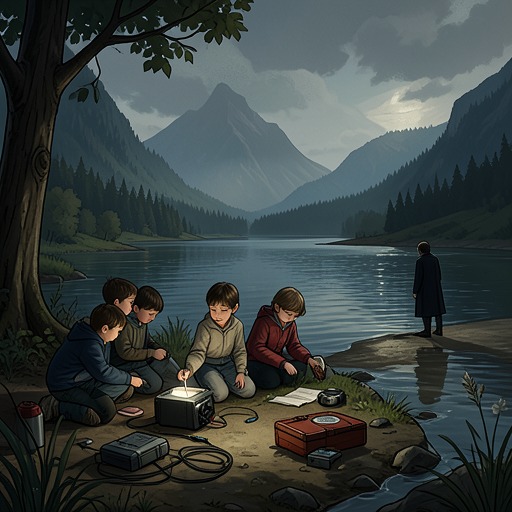
A clipping dated July 19, 1933, recounts the wildfire that threatened Halo Bay, a settlement at the north end of the lake with a store and camps used by local residents. Fred was fighting fires in the eastern part of the TR with roughly two hundred other men when the wind shifted and sent the danger toward the settlement. The newspaper’s account makes the change in wind, after a long dry spell, the immediate cause of the community’s sudden peril.
At Halo Bay, Fred’s wife, Hilda, was with their three-year-old twins, William and Carla. As the fire approached, people tried to leave by the settlement’s single road. Their vehicles congested the route, and a stalled car blocked the way out. Fred was away with the volunteer firefighters, leaving Hilda to manage the evacuation with other families amid the confusion.
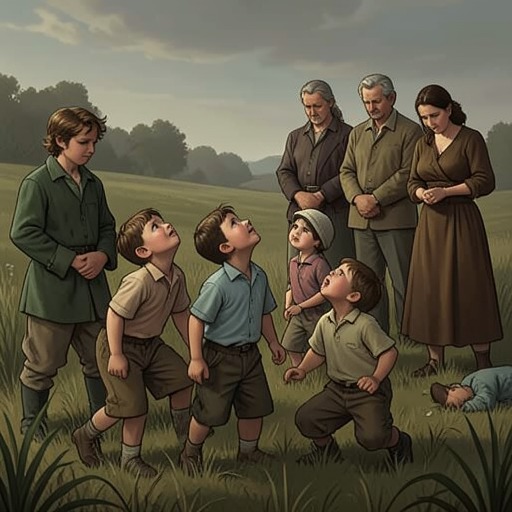
Hilda had put both children into the car. William and Carla had been together on the back seat, holding hands as they usually did. While Hilda put a few remaining belongings in the trunk, Carla apparently went back to the cottage for a toy or doll; Hilda then drove away without realizing the child was missing. When Fred reached his wife, William was asleep on the floor in the back of the car, but Carla was gone. The account cannot establish whether she remained at the cottage or was walking along the road; either possibility placed her in the path of the advancing fire.
Loss and narrative significance
The road was too narrow for vehicles to turn around, and the jam prevented the cars facing the wrong way from passing through. Fred set off on foot toward the smoke and the fire advancing from the horizon. The account establishes the urgency of his effort but does not resolve Carla’s fate in that moment; it leaves her disappearance as the disaster’s central unanswered loss.
The recovered clipping unsettles the public image of Fred as a local hero. He had been fighting the wildfire with other volunteers, and his attempt to reach his daughter is an act of desperate responsibility. Yet the same narrative has already shown him as one of the young men who took part in the violence against Sara. The contrast does not make those histories equivalent; instead, it refuses a simple division between respectable community elder and past participant in wrongdoing. Fred’s later family tragedy coexists with, rather than cancels, his earlier actions.
His scenes also connect private memory to a wider local history. The fires destroy the security of Halo Bay’s families, while the 1901 episode reveals how the community’s racial hierarchy permitted violence against Sara and Kito. Fred’s life thus crosses two kinds of catastrophe: the crimes the group commits against them and the disaster that takes his own child. Through him, the narrative makes the town’s past both intimate and inherited, carried forward in families even when the public record cannot answer every question it raises.